


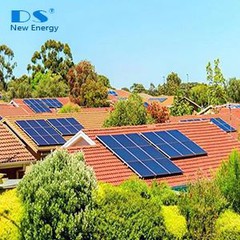






Brazil has achieved a remarkable feat by surpassing 2 million installations of photovoltaic solar systems across rooftops, facades, and small plots of land.

This achievement translates to a total installed capacity of 22 gigawatts (GW) of power in households, businesses, industries, rural properties, and public buildings, according to a survey conducted by the Brazilian Photovoltaic Solar Energy Association (Absolar).
Earlier this year, solar energy surpassed wind energy to become the second most important energy source in Brazil. Currently, solar energy accounts for 14.3 percent of the country's total installed power, trailing only hydroelectric power (51 percent ).
Projections for 2023 indicate a production range of 25 to 28 GW, building upon the nearly 18 GW of installed power achieved in 2022. This year, an additional 10 GW of installed capacity is expected.
The survey conducted by Absolar reveals that the 2 million photovoltaic systems in the country cater to 2.6 million consumer units. However, this accounts for less than 3 percent of Brazil's total number of consumer units.
The study highlights that photovoltaic technology has already reached 5,530 municipalities across the country. The states with the highest participation include Minas Gerais, São Paulo, Rio Grande do Sul, and Paraná.
Bárbara Rubim emphasizes the goal of extending this technology to all 5,570 Brazilian municipalities by year-end. "With increasing government programs promoting photovoltaic energy, including generation in public buildings, we anticipate achieving this objective," she added.
Private investments totaling BRL 111.2 billion have been poured into the sector since 2012, generating nearly 700,000 jobs and contributing BRL 29.8 billion to public revenues.


